Weather talk
In a week of heavy winds, unpredicted rain, and the promise of sun

Questions
How do we write about the changing climate in a way that recognises the incremental changes, and not just the catastrophes?
Is climate anxiety a legitimate response to the world, or a fear we should learn to control?
Why do I keep writing about climate change, when I feel generally indifferent to it?
Thinking
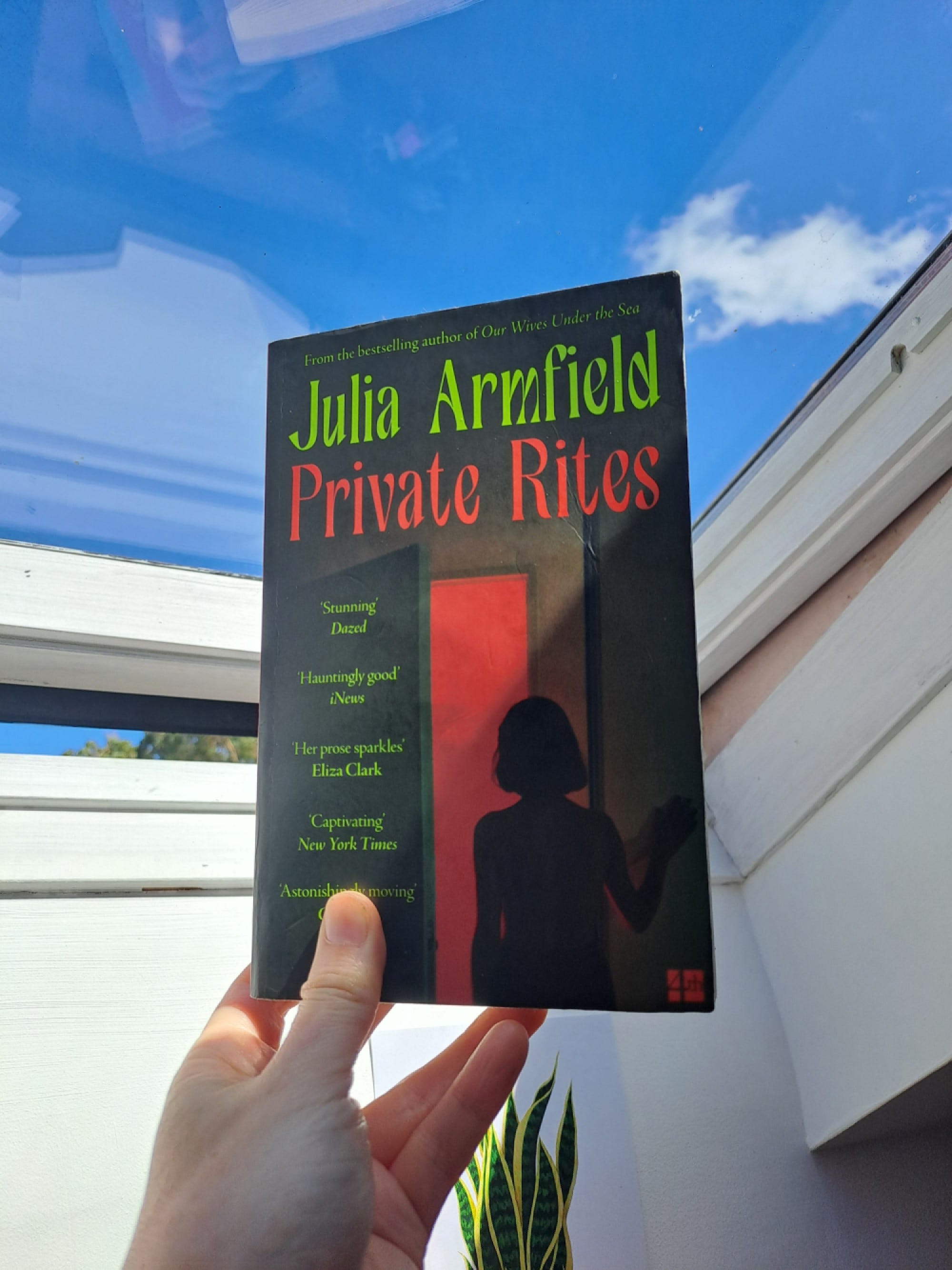
One of the beautiful things about Private Rites by Julia Armfield is how it manages to be situated during a genuine climate catastrophe, but the ways in which the characters talk about the water surrounding them has all the mundanity of any English person complaining about the weather.
It’s a pain that they have to get a water taxi to work.
It’s so tiresome that bodies can’t be buried in the flooded ground.
It’s so embarrassing that the town planners keep trying to build away from the water, and the water keeps rising.
When I think about the climate changing, I think about more rain (Birmingham). Fewer frosts (Canberra). Fewer jacket-free days (Birmingham). More fires (Canberra). Wilder storms (everywhere). More water restrictions (everywhere).
These changes that have an impact on how we live our lives, but don’t sit anywhere near a catastrophe.
Ghosh’s The Great Derangement talks about how we, humanity, aren’t reacting with enough urgency to the threat of climate change, and puts it down to the fact that realist literature can’t cope with it. The literature we look to as a mirror of our own lives has no language for the looming climate catastrophe.
This has been complicated (although not entirely dismissed) by the huge numbers of cli-fi novels that make climate catastrophe feel part of the everyday. But they still, often, are about catastrophe, unless they’re written by someone as talented as Armfield who can manage to do both.
I’ve just finished re-writing a short story I wrote a couple of years ago, and somehow changed it so the main character is suffering from climate anxiety. I love this story now (I thought I loved it before, but if I did it was in that way you can love a half-formed thing based on its potential, rather than its wholeness), but as I was tweaking it and getting it ready to send off for a couple of deadlines, I wondered why climate change had once again appeared in my fiction.
Because, you see, I’m pretty unconcerned about it myself, and yet I keep writing characters or stories that have it at their heart. It’s not that I’m in denial. I think the climate will continue to get incrementally worse, where the increments get chunkier as the years pass, until yes, maybe some sort of catastrophe hits or, more likely, we find ourselves in the midst of a catastrophe without realising it was happening. It feels too late to change this trajectory since it would require so many of us giving up a comfortable life, or, even less likely, people agreeing to remove the comforts of life for their children. So while I appreciate the effort of environmental policies, it feels like slowing the inevitable rather than changing the course of the future.
So why do I keep writing about it?
I think it’s because, as Nathan Englander put it, I’m writing towards what I want to know. Climate anxiety is real. People are tying themselves in knots. Children are growing depressed. Conversations about the weather are not only mundane small talk but the way we track the incremental changes. There seems no possible response to either the existential or physical threat of climate change other than yeah, it’s going to get pretty shit, so feeling anxious makes sense. Shall we get a coffee?
I wonder how many more stories I’ll write about people who are feeling this threat so deeply, or actually living through a climate catastrophe, as a way of trying to understand why I don’t feel that kind of anxiety when I can see the threat so clearly. I wonder if not feeling it is a blessing or a blindness.